
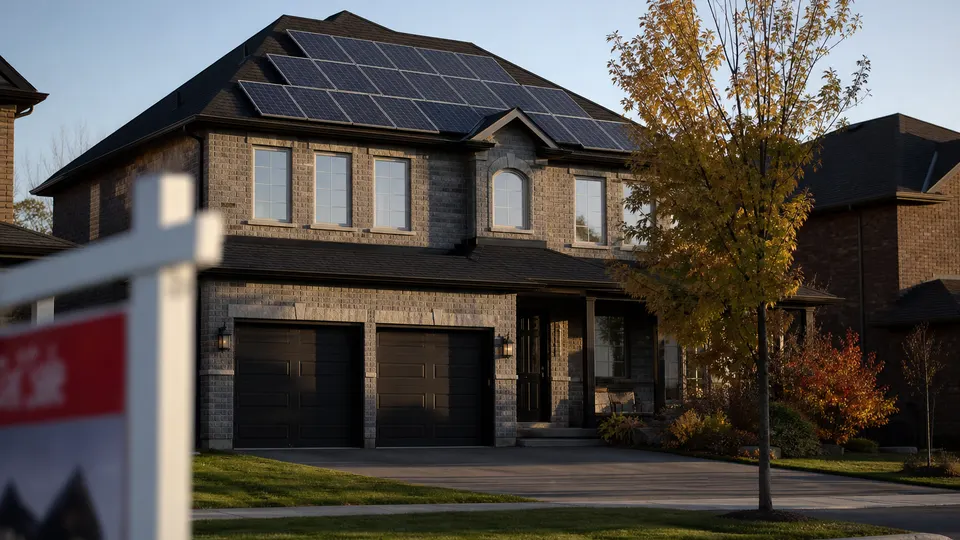
American studies frequently cite a premium of 3–4% for homes with owned solar. Canadian data is thinner — different incentives, lower penetration, and provincial utility rules mean you cannot paste US headlines onto a Mississauga listing. Still, buyers in Toronto, Vancouver, Calgary, and Montreal increasingly recognize rooftop PV as lower operating cost, not odd rooftop furniture.
Whether solar helps or hurts resale depends on ownership, system age, documentation, and local market literacy.
Owned versus leased: the resale split
Owned systems transfer with the property as fixtures. Buyers inherit hardware, warranties, and utility interconnection — subject to account transfer paperwork.
Leased systems require buyer assignment or seller buyout. Agents report deal friction when buyers discover lease payments after the first showing.
The resale premium conversation applies almost exclusively to owned arrays with clear title and production history.
What Canadian buyers actually value
Listing features that resonate:
- Documented annual kWh production from monitoring portals
- Estimated annual savings in dollars on the listing sheet
- Recent install with remaining equipment warranty
- Roof condition confirmed compatible with panel remaining life
- Net-metering or micro-generation account in good standing
Buyers skeptical of solar often worry about roof leaks, aesthetic impact, and removal cost. Professional install documentation and installer workmanship warranty address those fears better than generic "green home" labels.
Regional market differences
Greater Toronto Area: High electricity costs and TOU complexity make savings tangible. Agents in Oakville and Brampton occasionally highlight $1,400+ annual offset. Premiums are anecdotal — often folded into faster sale times rather than explicit price lifts.
Lower Mainland BC: CleanBC-era installs carry recognition among environmentally motivated buyers. Vancouver's dense housing means smaller roofs; right-sized systems with strong production data perform best on listings.
Calgary and Edmonton: Buyers compare solar homes against low regulated gas heat neighbours. Value proposition is future electricity cost stability and export credits, not immediate gas displacement. Hail history and insurance documentation matter in due diligence.
Montreal: Lower Hydro-Québec rates mean longer payback and less buyer enthusiasm for premium pricing — though francophone environmental buyers respond to quality-of-life narratives.
Quantifying value: approaches that work
Without a standardized Canadian PV premium index, sellers use:
- Appraisal narrative: Provide production logs and install cost for appraiser consideration — outcome varies by appraiser solar literacy.
- Operating cost comparison: Show three-year average hydro bills versus comparable non-solar homes — concrete for budget-conscious buyers.
- Remaining asset life: A 3-year-old system with 22 years of module warranty left has quantifiable replacement cost avoided.
Discounted cash flow of future savings — $1,500/year for 15 years at a conservative discount rate — can support $15,000–$20,000 value arguments in negotiations even when MLS fields lack a solar checkbox.
When solar does not add value
- End-of-life systems needing inverter replacement imminently
- Poor install aesthetics on street-facing roofs in heritage-sensitive neighbourhoods
- Roof requiring replacement within five years — buyers price removal and reinstall
- Oversized systems with expired net-metering credits — confusing billing legacy
- Leased arrays without prepaid buyout
Documentation package for listing day
Prepare a digital folder for buyer agents:
- Turnkey install invoice and equipment spec sheet
- ESA or provincial electrical inspection certificate
- Utility interconnection approval letter
- Monitoring login or PDF production reports (12–24 months)
- Warranty transfer instructions
- Insurance rider confirming panels covered
Transparency beats burying solar in an addendum discovered at offer time.
Buyer inspection questions to expect
- Who installed, and are they still in business?
- Any roof penetration leaks — request disclosure
- Can the system expand for an EV charger?
- What happens to net-metering credits at account transfer?
- Are panels owned outright or financed?
Answers should be factual. Ontario credits generally do not transfer as cash balances to buyers; new account holders start fresh at true-up.
Leased systems: discount or buyout?
Sellers choosing buyout before listing often recoup partial premium by marketing "owned solar included." Others offer closing credits covering two years of lease payments — cheaper than full buyout if the buyer accepts assignment.
Neither path is automatic win. Model buyout cost against expected days-on-market reduction in your price band.
Long-term outlook for Canadian PV premiums
Penetration is rising. As more agents encounter solar listings, comparables improve and pricing becomes less speculative. Climate policy and electrification — heat pumps, EVs — increase the value of homes with existing generation capacity.
Solar is not a guaranteed resale jackpot in Canada. It is a documented operating-cost reduction that savvy buyers pay for when paperwork is clean and the roof story holds up. Own the system, prove the production, and treat the array like any other major home improvement at sale time.