
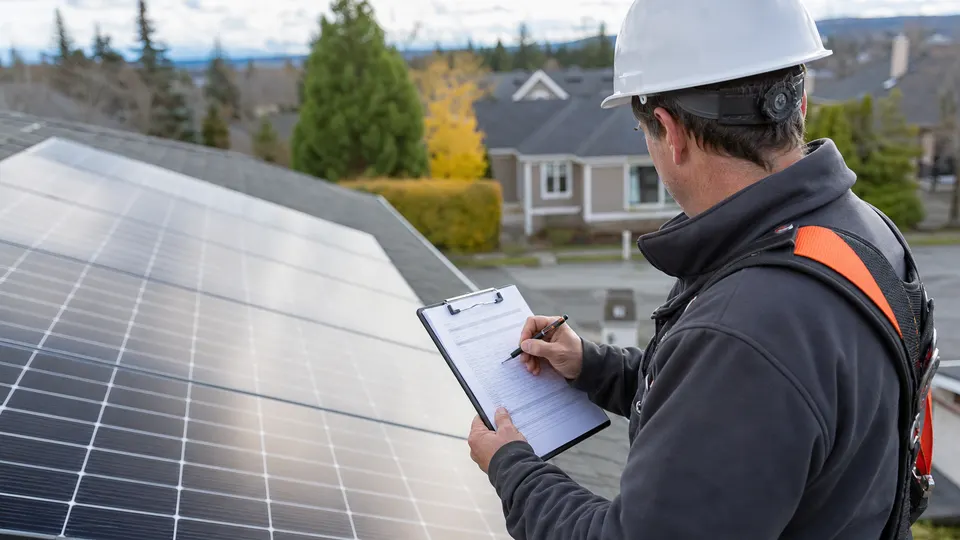
Solar installation is construction and electrical work under Canadian law — not a retail appliance drop-off. Modules must carry recognized certification marks, inverters must match provincial grid interconnection rules, and the people pulling permits must hold appropriate credentials from bodies like the Electrical Safety Authority in Ontario or equivalent regulators elsewhere. When door-knocker crews offer twenty percent below market with no inspection timeline, the savings often omit the paperwork that keeps fires, leaks and warranty claims insurable.
This article maps certification and licensing checkpoints for Canadian homeowners hiring rooftop solar — CSA and other product marks, provincial electrical contractor rules, inspection sequencing and red flags that should trigger a hard no.
CSA and product certification marks
Equipment installed in Canada generally must be certified to applicable Canadian standards — commonly indicated by CSA mark, cUL, or other recognized certification body labels acceptable to provincial inspectors. Modules, inverters, racking, disconnects and batteries each carry separate listing requirements. Uncertified grey-market imports may fail inspection and void insurance even if they produce power on test day.
Ask for model numbers before purchase and verify marks appear on nameplates, not only brochures. Inspectors compare physical units to permit submittals — substitutions without re-approval stop sign-off.
Provincial electrical licensing: not one national card
Electrical work is provincial jurisdiction. Examples homeowners encounter:
- Ontario: Electrical Safety Authority permits; licensed electrical contractors with ECRA/ESA credentials file notifications and arrange inspection.
- Quebec: Commission de la construction du Québec and RBQ contractor licensing; Master Electrician oversight for wiring.
- Alberta: Alberta Municipal Affairs safety codes; master and journeyman electrician requirements through provincial apprenticeship pathways.
- British Columbia: Technical Safety BC permits and qualified worker logbooks for regulated work.
A Ontario-licensed crew cannot legally wire a Calgary home without Alberta credentials. National franchise brands solve this with provincial subsidiaries — verify the local entity on your contract matches local licensing lookup tools.
Reference table: credentials to verify
| Item | What to ask for | Where to verify |
|---|---|---|
| Electrical contractor licence | Company name and licence number on quote | Provincial regulator online lookup — ESA, TSBC, etc. |
| Master/journeyman oversight | Named responsible electrician | Licence number cross-check |
| Equipment certification | CSA or cUL marks on spec sheets and units | Physical nameplate at install |
| Business liability insurance | Certificate of insurance with your address as additional insured upon request | Broker letter, not verbal assurance |
| Workers compensation | WSIB in Ontario, WCB in western provinces | Clearance certificate for contractors |
| Building permit | Municipal file number if required locally | City permit portal |
Inspection sequence you should see in writing
Legitimate projects follow a visible path:
- Site assessment and shade analysis documented
- Signed contract with equipment schedule and warranty PDFs attached
- Electrical permit application filed before energization
- Building permit if municipality requires structural review
- Installation per manufacturer specs and CE Code
- Rough-in and final electrical inspection passed
- Utility interconnection agreement and meter upgrade completed
- Commissioning report with serial numbers delivered to owner
Installers who promise same-week energization without mentioning permit lead times may skip steps — ask which inspection dates are already booked.
Red flags that should end the conversation
- Cash-only payment demanded before permits filed, with discount for skipping paperwork
- No physical business address or provincial licence number on quote
- Pressure to sign before utility interconnection review completes
- Equipment brands that cannot produce certification documentation
- Promise to leave old inverter or panel labels off to avoid utility detection — illegal for grid-tied systems
- Roof work without flashing details or structural mention on shallow pitches
- Verbal guarantee replacing written workmanship warranty
- Door-to-door reps unfamiliar with local net metering or micro-generation rules
Third-party certifications and industry memberships
Voluntary credentials supplement but do not replace provincial licensing:
- CanSIA membership — industry association advocacy and installer lists; not a government licence.
- NABCEP certification — individual installer training credential valued for design quality.
- Manufacturer authorized dealer tiers — access to warranty support; verify authorization letters.
Treat these as tie-breakers among equally licensed bidders, not substitutes for ESA or TSBC approval.
Utility interconnection and meter upgrades
Local distribution companies — Hydro One, ENMAX, BC Hydro, etc. — require applications with single-line diagrams and equipment specs. Only licensed paths connect net-metered or export-credited systems. Unauthorized parallel connections risk disconnection, fines and insurance denial after fire.
Bi-directional meter swaps follow utility schedules — delays are normal and unrelated to installer competence if communicated transparently.
Structural and roofing credentials
Mounting solar is not only electrical. Steep roofs, heritage districts and commercial flat roofs may need professional engineer stamps on ballast or attachment plans. Roofing integration should reference manufacturer-approved flashing kits. Installers without roofing subcontract relationships should document who warrants leak repairs at penetrations.
Contract clauses that protect you
Before deposit:
- Holdback tied to passed inspection and energization
- Equipment model lock-in or change-order approval for substitutions
- Timeline milestones with permit numbers filled in when issued
- Explicit statement that install complies with Canadian Electrical Code and local bylaws
- Warranty labour responsibilities for product versus workmanship failures
After install: documentation archive
Keep PDFs of permits, inspection stickers photographed, as-built layout, serial number spreadsheet, inverter firmware version at commissioning, and utility acceptance letter. Future buyers, insurers and warranty claims depend on this packet — not the sales rep's phone number.
Complaint pathways if things go wrong
Provincial safety authorities investigate unsafe electrical work. Consumer protection offices handle contract fraud in some provinces. Small claims court resolves deposit disputes when companies vanish. Report uncertified equipment to inspectors before energization — cheaper than after a failed audit forces removal.
In Canadian solar, the cheapest quote is expensive when the inspector fails the job and the utility refuses interconnection.
Certification is not bureaucracy for its own sake — it is how provinces keep grid-tied generation safe and insurable. Verify CSA-listed hardware, provincial electrical contractor licences, inspection milestones and insurance before crews step on your roof. Red flags around paperwork are red flags around everything that happens after the panels go up.