
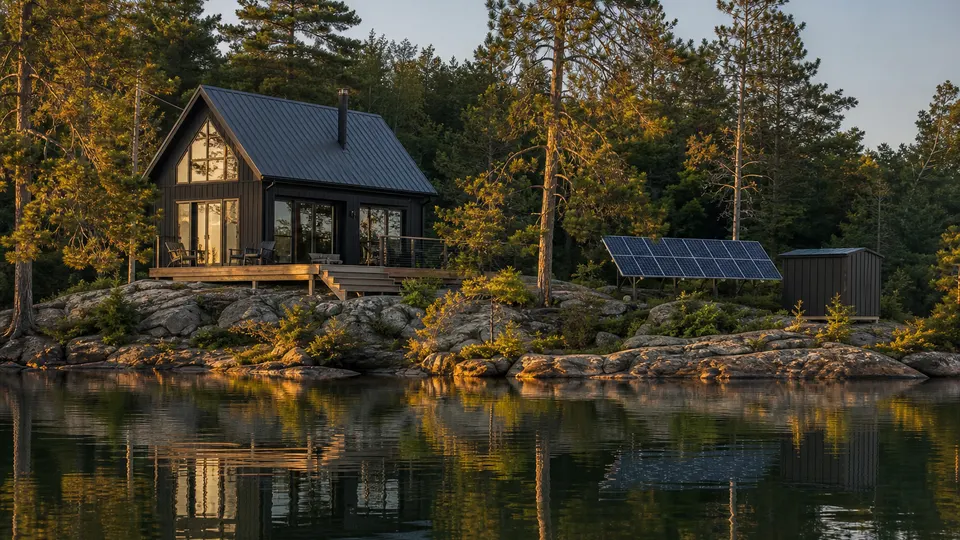
Thousands of Canadian cottages lack grid connection — Muskoka, Laurentians, Gulf Islands, and interior BC lakes included. Off-grid solar with battery storage can replace generator-only power for seasonal owners who understand one rule: the system sizes to your worst week of use, not your best sunny afternoon.
This guide covers load auditing, component sizing, winter shutdown, and cost expectations distinct from grid-tied urban installs.
Seasonal versus full-time off-grid
Seasonal cottagers typically occupy May through October. Systems can be smaller than year-round off-grid homes because:
- No winter heating load if cottage winterized and unoccupied
- Refrigeration may switch to propane or chest freezer only when present
- Water pumps and pressure systems run intermittently
Full-time remote homes need larger arrays, bigger battery banks, and reliable backup generators — different economics entirely.
Load audit: list everything that draws amps
Common cottage loads underestimated in casual planning:
- Well pump surge — 2,000–4,000 W startup
- Pressure tank cycling overnight
- Satellite internet and mesh Wi-Fi left on 24/7
- LED lighting — low individually, significant in aggregate
- Power tools during renovation weekends
- Small chest freezers — steady 100–200 W
Convert each to watt-hours per day. A cottage using 2 kWh/day needs radically different hardware than one using 8 kWh/day with espresso machine and AC.
Sizing framework
| Daily load (kWh) | Indicative array (kW) | Battery (kWh usable) | Notes |
|---|---|---|---|
| 1–2 | 1.5–2.5 | 5–10 | Minimal lights, water, phone charging |
| 3–5 | 3–5 | 10–20 | Fridge, internet, moderate pump use |
| 6–10 | 5–8 | 20–40 | Full appliances, occasional microwave |
| 10+ | 8–12+ | 40+ or generator heavy | Approaching full-time off-grid |
Add three days autonomy for cloudy stretches common in Ontario lake country and coastal BC inversions.
Battery chemistry in Canadian climates
Lithium iron phosphate (LiFePO4) dominates new installs — deeper discharge, longer cycle life, lighter weight than legacy flooded lead-acid. Batteries belong in insulated enclosures, not unheated boathouses exposed to −30 °C. Cold batteries derate capacity; some systems include heating pads drawing from solar or generator.
Lead-acid still appears in budget builds — cheaper upfront, shorter life, requires ventilation and maintenance.
Generator role: backup, not failure
Sensible off-grid design assumes generator contribution for:
- Extended shoulder-season storms
- Battery maintenance equalization on lead-acid
- Heavy tool use exceeding inverter surge rating
Auto-start generators tied to battery state of charge (SOC) reduce owner anxiety. Propane stores better than gasoline over winter layup.
Charge controllers and inverter-chargers
MPPT charge controllers maximize harvest from array to battery. Inverter-chargers convert battery DC to 120 V AC and pass generator or shore power through when available. Select inverter continuous rating above largest simultaneous load — usually pump plus fridge startup stack.
Winter shutdown protocol
Seasonal owners leaving cottages vacant November–April should:
- Disconnect or fully charge batteries per manufacturer storage spec
- Drain plumbing; solar can remain operational for security lighting if desired
- Shut down inverter loads; parasitic draws drain banks over months
- Document restart procedure for spring opening
Some owners leave minimal solar maintaining trickle on batteries in heated battery shed — requires professional design to avoid overcharge.
Grid connection alternative economics
Utility line extension to remote lots often costs $30,000–$100,000+ per kilometre in Hydro One and BC Hydro territories. Off-grid solar capital in $25,000–$60,000 range competes when grid distance exceeds a few hundred metres — compare twenty-year cost including generator fuel and battery replacement.
Permits and insurance
Municipal building permits apply even off-grid on owned land in many townships. Insurance companies ask for electrical inspection certificates — Technical Safety BC and ESA equivalents on cottage wiring reduce claim disputes after fire.
Environmental and noise benefits
Replacing nightly generator hours with silent solar-charged batteries improves neighbour relations on quiet lakes — and eliminates fuel hauling. Bear-proof storage still required for propane.
Common cottage off-grid mistakes
- Undersizing pump surge capacity
- Leaving inverter on all winter draining bank
- Expecting standard split AC without massive array
- Skipping generator backup to save upfront cost
- Installing batteries in unheated shed without cold plan
Bottom line
Off-grid cottage solar rewards honest load lists and conservative autonomy margins. Size for cloudy June weeks and pump surges, not Instagram sunset photos. Seasonal Canadian cottagers who match expectations to physics enjoy quiet, generator-free summers — those who skip the audit listen to generators hum while neighbours swim.