
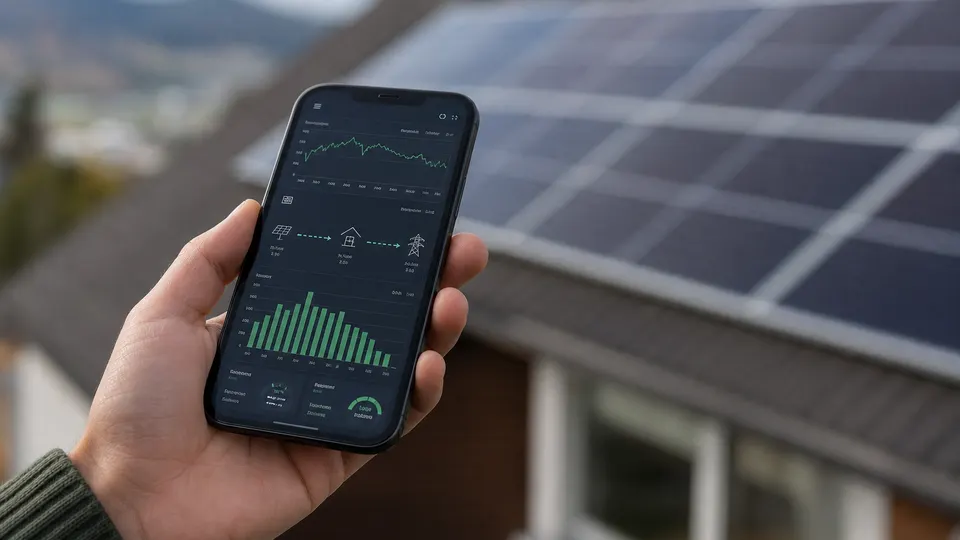
Grid-tied solar fails quietly. No smoke, no hum change audible from the living room — just a flat line on a graph you have not opened since install day. Monitoring apps bundled with Enphase, SolarEdge, Fronius, Huawei, and other inverters transform production data into early warning when something drifts wrong.
Canadian homeowners using monitoring effectively treat it like a smoke detector check: monthly glance, immediate response to sustained anomalies.
What monitoring platforms show
- Real-time and historical production (kW, kWh)
- Per-module or per-string data with MLPE systems
- Grid export and consumption when CT clamps installed
- Error codes, communication faults, ground fault events
- Environmental offsets — CO₂ narratives, not financial core
Consumption monitoring requires additional CT on main service — valuable for self-consumption tuning, optional at install.
Setting alert thresholds
Configure email or push notifications for:
- Inverter offline more than four hours during daylight
- Daily production below seventy percent of seven-day rolling average (clear sky days)
- Ground fault or arc fault trips
- Communication gateway offline — may mask real inverter status
Disable nuisance alerts for known snow events — note in log rather than chasing false alarms.
Comparing to expected production
Installer proposals should include monthly kWh estimates. Overlay actuals monthly:
| Variance | Likely cause |
|---|---|
| −5 to −10% annual | Weather, soiling, minor shade growth — normal |
| −15 to −25% sustained week | Inverter fault, partial snow, string issue |
| −40%+ single string | Module failure, connector corrosion, rodent damage |
| Zero production sunny day | Inverter offline, AC disconnect open, meter issue |
PVWatts actuals for your postal code provide independent sanity check.
Utility meter versus app reconciliation
Annual true-up should match monitoring within five percent. Larger gaps indicate:
- CT clamp reversed on consumption CT — export/import inverted in app
- Utility meter calibration difference — rare
- Monitoring not capturing full array — misconfigured site
Photograph utility meter readings quarterly for dispute paper trail with LDC.
Weather normalization
Do not panic on one cloudy week. Compare same month year-over-year. Canadian wildfire smoke summers (Alberta, BC, Ontario) suppress production twenty to forty percent on heavy days — documented in app dips, not equipment failure.
Warranty claims supported by data
Production guarantees in contracts often require documented underperformance over six to twelve months versus model, excluding weather. Export monitoring CSV before calling installer — timestamped logs strengthen claims. Module warranty for defective cells needs IV curve test or installer assessment — app shows symptom, not root cause proof.
Privacy and data ownership
Monitoring accounts register to emails — transfer credentials on home sale. Some platforms allow account migration to new owner; others need installer intervention. Understand whether production data sits on Chinese, European, or North American servers if privacy matters — manufacturer policies vary.
Third-party aggregators
Services like SolarEdge monitoring portal, Enphase Enlighten, or Fronius Solar.web are manufacturer-native. Third-party fleet tools target commercial. Residential add-ons rarely needed unless combining solar with home energy management platform.
When app says fine but bill says wrong
Net metering credit errors happen at utility billing — app cannot see bill logic. If production normal but credits missing, call LDC with meter photos and interconnection agreement — not installer first.
Monthly five-minute routine
- Open app; note month-to-date kWh
- Compare to same point last year
- Scan for red error badges
- Log anomalies in home maintenance spreadsheet
Bottom line
Monitoring apps are free insurance on a five-figure asset. Canadian seasons throw snow, smoke, and cold at arrays — distinguish weather from failure using trends, not snapshots. Look monthly; act on sustained dips; keep CSV exports for warranty day.