
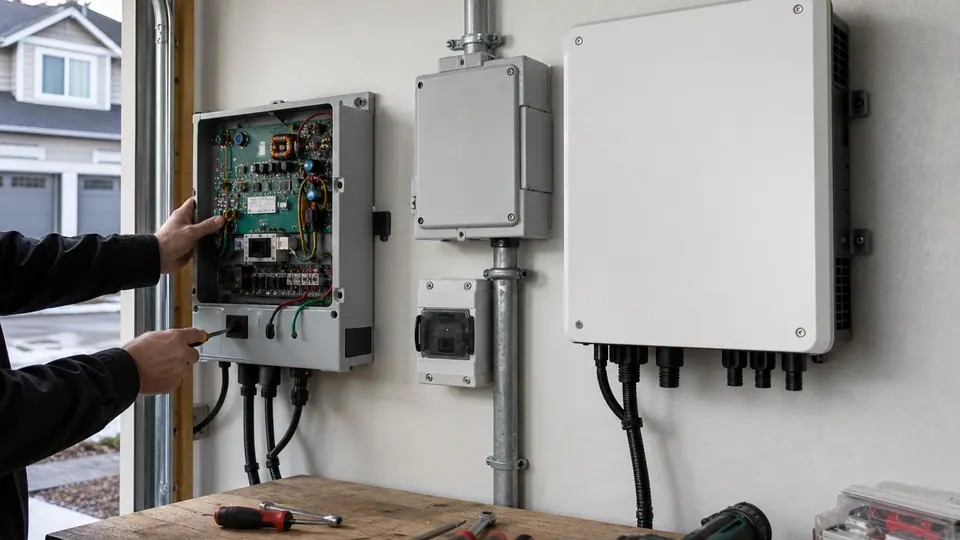
Solar marketing emphasizes twenty-five-year panel warranties. Inverters — the brains converting DC to grid-synchronous AC — typically carry ten to fifteen-year warranties and fail more often in years twelve through eighteen. Canadian homeowners who treat inverter replacement as distant fiction get surprised by four-figure repair quotes just when payback finally looked good.
This guide covers failure modes, cost ranges, string versus microinverter economics, and how to reserve for replacement without derailing ROI math.
Expected lifespans by inverter type
String inverters (central): One box per array; common brands specify 12–15 year design life; heat and capacitor aging drive failures. Outdoor wall mounts in direct sun fare worse than garage installations.
Microinverters: One unit per panel; distributed heat load; warranties often 15–25 years on leading brands but unit count multiplies replacement events.
Power optimizers plus string inverter: Hybrid; optimizer failures may occur independently of central unit.
Why inverters fail before panels
- Electrolytic capacitor degradation from thermal cycling
- Grid voltage transients and utility switching events
- Moisture ingress on outdoor enclosures not perfectly sealed
- Manufacturer firmware end-of-support leaving orphaned hardware
Cold Canadian winters are less stressful than Arizona heat — but freeze-thaw on enclosures and rodent nesting in conduit entries add local failure paths.
Replacement cost ranges (2026 CAD, residential)
| Scenario | Typical installed cost | Timeline notes |
|---|---|---|
| Like-for-like string inverter swap | $2,000–$4,500 | 1–2 days if model available |
| String upgrade with MLPE retrofit | $4,000–$8,000 | May need redesign and permits |
| Single microinverter replacement | $250–$600 | Roof visit required |
| Multi-unit micro failure batch | $1,500–$5,000 | Labour dominates on steep roofs |
| Full system inverter architecture change | $6,000–$12,000+ | Rare; often full redesign |
Steep roof labour, rural travel, and emergency winter service premiums sit at the high end.
Warranty versus reality
Extended inverter warranties may transfer once on home sale — verify transfer fees and registration deadlines. Manufacturers exit markets; warranty claims against defunct brands become asset write-offs. Keep purchase invoices and serial numbers in cloud storage.
Some installers offer third-party extended warranty — compare premium to self-funded replacement reserve.
Budgeting method: replacement reserve
Add $150–$250/year to mental solar operating cost from year one — roughly $3,000–$5,000 nominal at year fifteen with no investment return assumed. Include in home maintenance spreadsheet alongside roof and heat pump service.
Financially, spreading inverter cost across years eleven through fifteen still leaves years sixteen through twenty-five as high-margin production if panels remain healthy.
String versus micro at replacement time
Failed string inverter on obsolete model may force entire platform migration if no compatible replacement exists. Microinverter owners replace individual units but face roof truck rolls costing $200–$400 minimum visit fees. Neither architecture eliminates mid-life cost — they distribute it differently.
Permits and utility notification on swap
Major inverter changes affecting nameplate AC output may require utility amendment and electrical inspection in Ontario (ESA), BC (TSBC), and other provinces. Like-for-like replacement on same model sometimes qualifies as maintenance — electrician determines classification. Unpermitted swaps risk insurance denial after fire.
Symptoms preceding failure
- Intermittent production drops on monitoring portal
- Audible buzzing or fan noise change
- Ground fault or arc fault trip codes
- Visible corrosion on DC terminals (call electrician immediately)
Do not open inverter enclosures — high voltage inside even when grid disconnected.
Used and grey-market inverters
Second-hand inverters save capital but may lack warranty, firmware support, or compatibility with current grid codes. Utility interconnection may reject non-current listings. Generally poor economy for residential unless temporary bridge with written plan.
Planning at original install
- Choose inverter with documented parts availability in Canada
- Prefer garage or shaded mounting location when possible
- Document model numbers on panel directory inside home
- Ask installer about extended warranty and labour rates for future swap
- Negotiate optional future swap labour cap in original contract — rare but possible
Bottom line
Inverter replacement is a when-not-if line item in Canadian solar ownership. Panels outlive their first inverter almost always. Model it in payback spreadsheets from day one — year twelve arrives faster than your warranty paperwork suggests.