
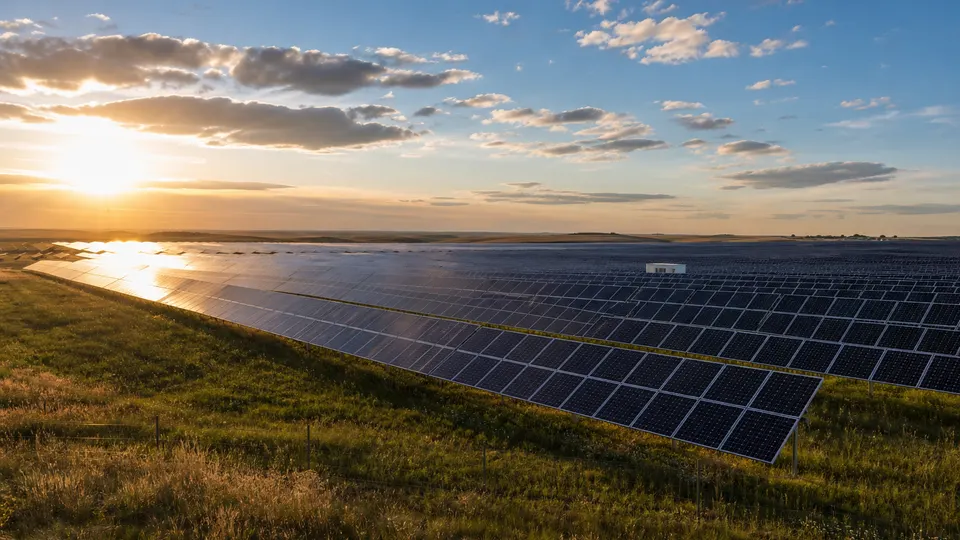
Alberta receives more annual sunlight than Germany — yet not every Edmonton condo dweller or Calgary shade-tree bungalow can host panels. Community solar — shared generation facilities where subscribers receive bill credits or returns — fills that gap within the province's competitive electricity market.
Models differ from Ontario net metering and BC rooftop norms. Here is how community solar works in Alberta in 2026 and who it suits.
What community solar means in Alberta
Instead of mounting panels on your roof, you buy or lease a share of a centralized array — often ground-mounted on farmland, church property, or industrial rooftops. Energy generated is metered at the facility and attributed to subscribers through contractual credits on their electricity bills or dividend-like payments.
Alberta's micro-generation and competitive retail framework created space for cooperatives, municipally backed projects, and private developers to offer subscription products.
Who benefits most
- Renters without roof rights or long-term tenure
- Shaded properties where production models show poor ROI
- Heritage and HOA-restricted homes where visible arrays are prohibited
- Supporters prioritizing local clean generation over maximum financial return
Homeowners with good roofs and stable tenure usually achieve better economics from direct ownership — community solar carries middleman cost.
Ownership models
Cooperative shares: Members purchase shares in a co-op owning the array. Returns flow from export agreements and subscriber fees. Governance is member-driven — examples include rural Alberta solar cooperatives.
Subscription credits: Pay monthly fee for allocated kWh credits on your retailer bill. No equity ownership; simpler exit but less upside.
Private project investment: Accredited or permitted investors fund larger arrays; distinct from residential subscription but part of the ecosystem.
Regulatory foundation
Alberta Utilities Commission rules govern generation registration, site metering, and size classifications. Community projects must comply with:
- Micro-generation or small-scale generation registration thresholds
- Bi-directional or aggregate metering arrangements
- Retailer agreements for credit flow to subscribers
- Land use and county development permits for ground mounts
Developers navigate complexity so subscribers see simplified billing — but contracts still define credit calculation when retailers change.
Economics versus rooftop
Rooftop micro-generation in Calgary might produce 1,200+ kWh/kW annually with export credits at retailer-specific rates. Community solar subscribers receive credits minus project overhead — admin, land lease, operations.
Expect modest savings compared to ideal rooftop ownership — often comparable to green power purchase premiums rather than full retail offset. Value proposition includes access and simplicity, not maximum IRR.
Urban Calgary and Edmonton participation
Cities promote climate plans supporting community projects on municipal land or through partnerships. Urban subscribers typically join waiting lists — demand exceeds shovel-ready projects. Sign up early for notification when tranches open.
Condo corporations exploring central arrays on parkades represent a hybrid: shared benefit for unit owners without individual roof installs.
Comparison with Alberta rooftop micro-generation
| Factor | Rooftop owned | Community subscription |
|---|---|---|
| Upfront cost | $20,000–$35,000 typical | Low or none |
| Bill credits | Direct micro-gen export | Contractual allocation |
| Home resale | Owned asset or transferable lease | Subscription may not transfer — check contract |
| Maintenance | Owner or installer warranty | Project operator |
| Retailer choice | Shop export rates annually | May tie to project retailer deal |
Retailer and credit risk
Alberta's retail market allows switching providers. Community contracts should specify what happens to credits if the project's anchor retailer exits or if you switch retailers independently. Ambiguity here is a common contract weakness.
Due diligence for subscribers
- Project registration status with AUC
- Operator track record and maintenance plan
- Insurance and hail coverage for ground arrays
- Exit clause if you move out of province
- Fee escalators over contract term
- What happens if project underperforms versus model
Decision guide
Choose community solar if you cannot install rooftop PV and want bill participation without capital outlay. Choose rooftop ownership if your roof, budget, and tenure support direct micro-generation with retailer rate shopping.
Alberta's sun is shared resource — community models let more households participate, but read subscription contracts with the same care you would bring to a 20-year lease on your own roof.